Did Public Housing Conversion Lead to More Evictions?



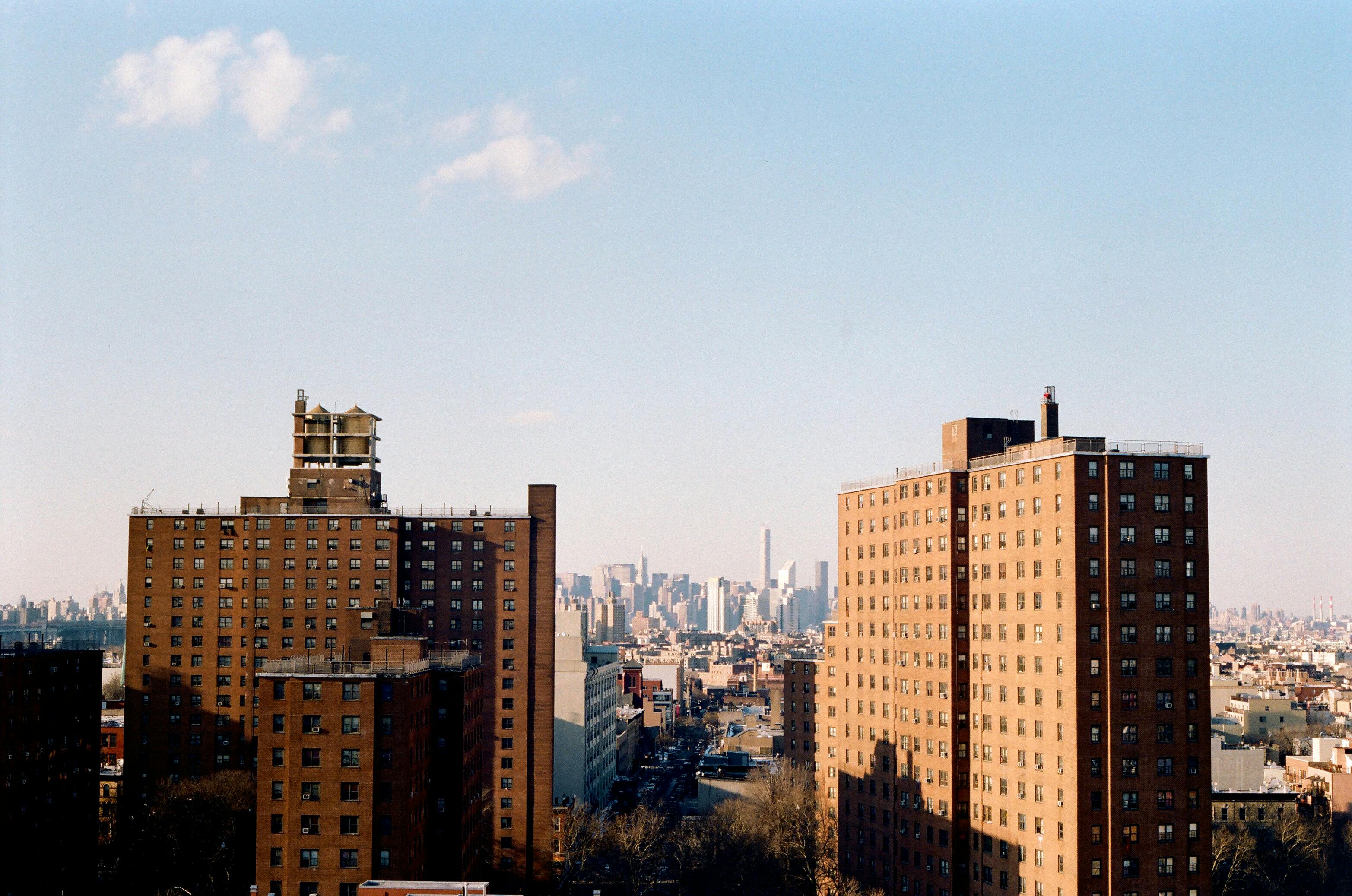
Public housing in the United States has been slowly decaying for decades. After years of substandard construction and inadequate funding for maintenance, many developments desperately need safer wiring, working elevators, better heating systems, new roofs, and other basic repairs. In 2012, Congress created the Rental Assistance Demonstration program (also known as RAD) as one response to that problem. The program allows housing authorities to convert developments from traditional public housing funding to project-based Section 8 contracts, making it easier to borrow money and bring in other funds for major repairs and rehabilitation. By 2024, nearly 230,000 public housing units—almost one-fifth of all public housing—had gone through RAD conversion.
From the beginning, RAD has raised a variety of concerns. Tenants and advocates have worried that a program meant to preserve public housing might end up making it less secure for the people living there. If conversion brings in new private managers, would those managers be quicker to turn to the courts when tenants fall behind on rent? Would redevelopment create pressure to push residents out? Would RAD—like the HOPE VI program before it—become another housing policy that promised improvement while exposing tenants to new risks?
In a first systematic national study of RAD-related displacement published in Housing Policy Debate, we address one important aspect of this debate: Does RAD conversion lead to more formal evictions? Looking at more than 4,000 public housing developments nationwide and more than half a million eviction records, we find no evidence that this is happening. On average, RAD conversion was not associated with an increase in eviction filings or eviction judgments. That was true in New York State, where we have especially detailed and long-running data, and it was equally true in the rest of our sample as well.
READ THE ARTICLE:
The Effects of RAD Conversion on Eviction Patterns
Ellie Lochhead, Peter Hepburn, & Ingrid Gould Ellen
In theory, public housing offers the sort of stability that is often difficult for low-income households to access in the midst of a historic affordability crisis. Tenants pay rents adjusted to their income, and they have stronger protections than most renters in the private market. If agencies or outside managers were going to become more aggressive after conversion, eviction court is one place where we would expect to see it. Earlier research has shown that public housing agencies file eviction cases at high rates and often use the threat of eviction as a rent collection tool. This means that RAD conversion could actually have an opposite effect, reducing eviction rates from these developments.
To study the issue, we assembled records for 617,900 eviction cases filed between 2010 and 2024 against residents of 4,410 public housing developments across 43 states and the District of Columbia. During the study period, 812 of those developments (18%) went through RAD conversion. These data let us compare eviction patterns before and after conversion, while also comparing converted developments to public housing properties that either never converted or had not yet converted. Because we had access to more data from New York State—and because the state is home to the New York City Housing Authority (NYCHA), the nation’s largest housing authority—we analyzed New York separately from the rest of the sample.
We focused on two measures. The first was the eviction filing rate, which tells us how often landlords bring tenants to court. The second was the eviction judgment rate, which tells us how often those cases end with a judge ruling against the tenant. Judgments matter because they reflect a later and more serious stage of the process. We also looked at two different points in the RAD timeline: the point when HUD approved the deal and the point down the line when the conversion officially closed. That let us test whether eviction patterns changed in the run-up to conversion, not just after it was finalized.
The results are consistent: We found no evidence that converting public housing buildings to Section 8-based developments increased eviction rates. In the years leading up to conversion, developments that later converted did not appear to be on a different path from those that had not yet converted. And in the years after conversion, eviction filing rates did not rise or fall in a clear or statistically meaningful way. When we repeated the analysis using the earlier approval date instead of the closing date, the results looked much the same.
The same pattern repeats for eviction judgments. RAD conversion was not associated with more cases ending in judgments against tenants. We also ran a series of additional checks to see whether the answer changed under different assumptions. We tried alternate comparison groups, dropped developments that were in the RAD pipeline but had not yet closed, limited the sample to years before the pandemic, and tested a matched-control version of the analysis. Across all those checks, the same result held: on average, RAD conversion did not lead to more or less formal eviction activity.
RAD has become a major part of the public housing landscape, and debates about the program often turn on whether preservation comes at the price of displacement. Our results suggest that, when considering formal eviction filings and judgments, there is little evidence of heightened displacement risk, at least on average.
At the same time, we want to be careful about what this study can and cannot show. These results don’t mean that RAD has avoided all negative effects on tenants, or that every conversion has gone smoothly. Our analysis is about formal court cases. It cannot capture every kind of hardship that residents may face during or after conversion, including construction disruption, temporary relocation, pressure from management, informal displacement, or administrative removals that do not appear in court data. It is also possible that specific properties saw increases in eviction trends, but the average effect across hundreds of properties was effectively zero.
The study also has limits in geographic coverage. Our sample is large, but it does not include every public housing development in the country. Data were limited in several large states, including California, Texas, and Illinois. That means our findings are broad, but they are not the final word on every local context. Even so, this is the first systematic national study of RAD and formal eviction, and it points in a clearer direction than the public debate has often allowed.
Public housing policy in the United States has long been shaped by both crisis and distrust. RAD emerged because the existing system was badly underfunded and many buildings were falling apart. But residents also have good reason to be skeptical when officials promise preservation and reinvestment. Against that backdrop, it matters that we do not find evidence of a broad rise in formal evictions after conversion. That does not settle every debate about RAD, but it does answer one important question more clearly than before. In a policy area shaped by so much uncertainty, that is a meaningful finding—and, we think, a more reassuring one than many observers expected.
 Filed under researchFiled under research